
DEXA and Bone Health
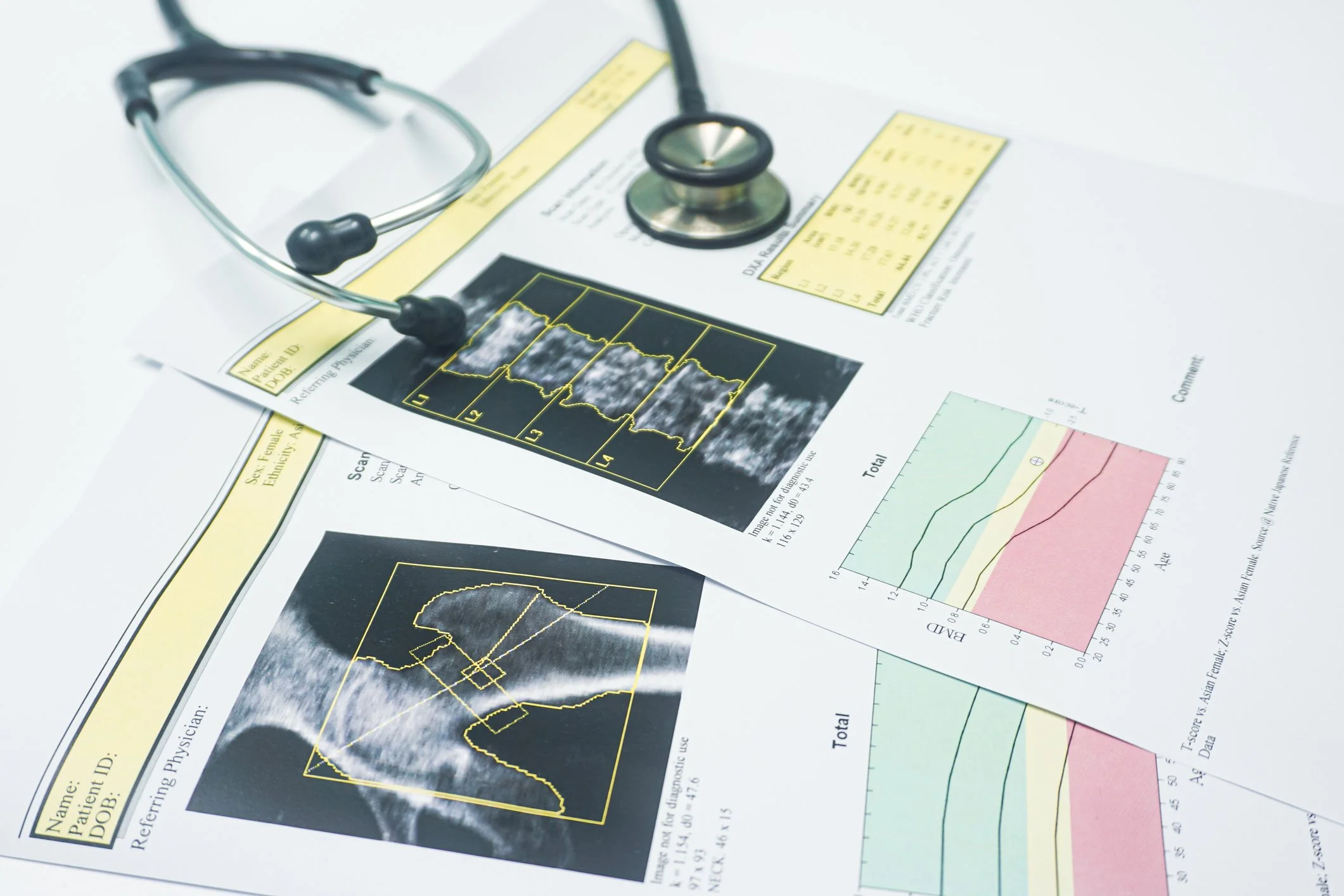
Understanding DEXA Scans: the simplest way to measure bone risk early
DEXA scans measure bone density and give you a T score that helps predict fracture risk. Learn who should get tested, how to interpret results, and what to do next. Bone loss is usually silent. You do not feel it happening. You often only find out after a fall leads to a fracture.That is why a DEXA scan matters. It turns a silent problem into a measurable number, so you can act early and protect your mobility for decades.
What a DEXA scan is
DEXA (also written DXA) stands for dual energy X ray absorptiometry. It is the most common test used to measure bone mineral density.
Most scans focus on:
-
Hip
-
Lower spine (lumbar spine)
The test is quick, painless, and noninvasive. You lie on a table while the scanner passes over you. In most cases, it takes about 10 to 20 minutes.
How DEXA results are scored
Your report usually includes a T score. This compares your bone density to a healthy young adult at peak bone mass.
T score ranges:
-
Normal: above -1.0
-
Osteopenia (low bone mass): -1.1 to -2.4
-
Osteoporosis: -2.5 or below
Some reports also include a Z score, which compares you to people your age and sex. Your clinician will tell you which score to prioritize for your situation.
Why bone loss happens
Bone is living tissue. Your body constantly breaks down old bone and builds new bone.
With age, that balance can shift toward more breakdown than building.
For many women, the biggest shift often happens around menopause because estrogen helps regulate bone turnover. When estrogen drops, bone loss can accelerate.
Men can also develop osteoporosis. The bigger issue is that men are less likely to be screened, so problems can be missed until later.
Who should consider a DEXA scan earlier
Age is one factor, but risk matters just as much. Discuss earlier screening if you have one or more of these:
-
Prior fracture from a minor fall
-
Parent who had a hip fracture
-
Early menopause or surgical menopause
-
Long term steroid use (like prednisone)
-
Low body weight or significant weight loss
-
Smoking
-
Heavy alcohol use
-
Conditions that affect absorption or hormones
DEXA is a decision tool
A DEXA result helps answer three practical questions:
-
Are you losing bone faster than expected?
-
Are you at higher risk for fracture?
-
What should your plan be right now?
It also gives you a baseline so you can track change over time.
Why results can be confusing
DEXA is very useful, but results can be affected by:
-
Arthritis or degeneration in the spine
-
Old fractures
-
Surgical hardware
-
Body positioning during the scan
That is why the best approach is not just reading the number. It is interpreting the number in context of your history and risk.
What to do with your DEXA result
If your scan is normal
-
Your goal is to keep it that way.
-
Focus on strength training, adequate protein, healthy Vitamin D and calcium habits, and fall prevention as you age.
If you have Osteopenia, Osteopenia is a warning light. It does not mean you will fracture, but it does mean you should take action now.
Priorities:
-
Progressive resistance training
-
Balance and stability work
-
Nutrition that supports bone and muscle
-
Reviewing medications and risk factors with your clinician
If you have Osteoporosis, Osteoporosis means fracture risk is higher. Lifestyle still matters a lot, but medical therapy may be appropriate depending on your risk level and history.
This is also where safety matters most. You still want strength training, but you want it coached and progressed carefully.
Training that supports bone
Bone responds to load. The right kind of training signals your body to build and maintain bone.
The key is matching the plan to the person:
-
Start with technique
-
Build gradually
-
Train consistently
-
Avoid ego lifting
-
Get supervision if you have osteopenia or osteoporosis
A simple weekly structure many people can start with (discuss with your clinician):
-
2 to 3 days per week of strength training
-
2 to 3 days per week of walking or low impact cardio
-
2 to 3 short balance sessions per week (5 to 10 minutes)
-
Daily protein and hydration consistency
Nutrition basics that support bone
Bone health is not only calcium. It is a full system.
Basics:
-
Protein supports muscle, and muscle helps reduce fall risk
-
Vitamin D supports calcium absorption and muscle function
-
Calcium supports bone structure
Your clinician can confirm what is right for you based on your labs, history, and goals.
Hormones and the menopause window
For peri and post menopausal women, hormone therapy may reduce fracture risk in some cases. This must be personalized based on symptoms, family history, and medical risk factors.
This is not a one size fits all decision. It is a conversation with your clinician.
When medication becomes the smart move
If osteoporosis is established or fracture risk is high, medications can reduce fracture risk.
Common categories include:
-
Therapies that slow bone breakdown
-
Therapies that help build bone
-
Structured sequencing for very high risk cases
The right plan depends on your risk, age, fracture history, and tolerance. It should be individualized.
How we use DEXA at Paradigm Health
At Paradigm Health, we use DEXA to build a clear plan, not just hand you a report.
A typical review includes:
-
Your T score and what it means
-
Your risk factors and fracture risk picture
-
Training guidance that matches your ability and history
-
Nutrition and supplement guidance that is realistic
-
When medical therapy should be considered
-
When to recheck so you can track progress
Book a DEXA and Bone Health Review
If you want help interpreting your DEXA, or deciding whether you should get one, schedule a DEXA and Bone Health Review here: https://paradigmhealth.org/contact
Medical note: This article is educational and not medical advice.